Surprising fact: a non-custodial wallet can still leak as much metadata as an exchange if it’s not designed with privacy at every layer. That gap—between having the keys and truly keeping transactions private—is where design decisions matter. For privacy‑minded users in the US, selecting a wallet for Monero (XMR), Bitcoin (BTC), and other coins is as much about network hygiene and protocol features as it is about device security or user interface.
This article walks through the mechanisms that produce privacy, shows where trade‑offs arise, and gives practical heuristics you can use when evaluating multi‑currency wallets. I’ll use Cake Wallet’s feature set as an organizing example—covering Monero’s stronger default privacy model, Bitcoin’s layered privacy tools, Zcash and Litecoin special cases, hardware integration, and the operational hygiene that actually preserves anonymity.
How wallet privacy is built — the mechanics that matter
Privacy is not a single feature; it’s a stack. At the bottom sits device security: if an attacker can read your phone or laptop, no wallet will protect you. Modern wallets use device‑level encryption—Secure Enclave on iOS or TPM on Android—to keep seed material protected, and local access is gated by a short PIN or biometric. That protects against many casual attacks but has limits: physical compromise, forensic extraction techniques, or insecure backups can still expose keys.
Above device security is network anonymity. Even if keys never leave your device, broadcasting transactions from your home IP can link you to activity. Good wallets provide options: Tor-only mode, I2P proxy support, or connecting to a custom node. Using dedicated privacy‑preserving networking keeps node operators or ISPs from trivially correlating your broadcast timing with wallet addresses.
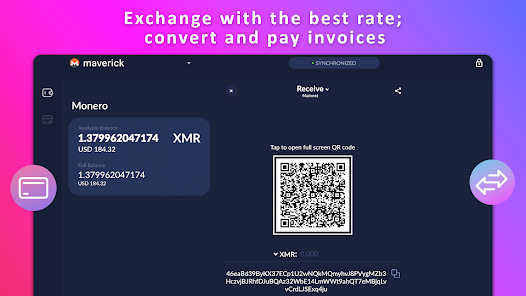
Next are coin‑level privacy mechanisms. Monero uses ring signatures, stealth addresses, and confidential transactions by default; the wallet’s job is to use those tools correctly—for instance, generating subaddresses for unique incoming routes and ensuring the private view key never leaves the device. Bitcoin, by contrast, is transparent by default but supports privacy tools like PayJoin v2, Silent Payments, coin control (selecting which UTXOs to spend), and batching to reduce linkability. Zcash introduces shielded addresses that must be handled carefully: mandatory shielding ensures outgoing funds originate from shielded (z‑) addresses to avoid leaking transparent history.
Comparing the trade-offs: Monero vs Bitcoin vs others
Mechanism-first: Monero gives you privacy by construction—most metadata is never published on-chain. That makes operational simplicity a strength: correctly using subaddresses and letting the wallet keep the view key local is often sufficient. The trade-off is interoperability and tooling: many exchanges and services still limit Monero flows, and on‑chain analytics are less usable if you need to prove provenance for compliance or custody purposes.
Bitcoin is flexible: you can layer privacy tools selectively. A wallet that supports PayJoin v2 and Silent Payments can greatly reduce linking for individual payments. UTXO coin control is essential—without it, change outputs can create accidental linkability. Batching transactions reduces on‑chain footprint and can improve privacy per payment. But Bitcoin’s privacy is fragile and handshake‑dependent: a single direct broadcast from your real IP or a poorly chosen coin selection can undo sophisticated mixing strategies.
Litecoin with MWEB and Zcash with enforced shielding illustrate another pattern: optional privacy layers that must be consciously activated. Mandatory shielding for Zcash outgoing transactions, for example, reduces accidental leaks, but moving funds from some legacy wallets (Zashi) into a different shielded model can require manual migration—an operational limitation users must plan for.
Operational hygiene: what actually preserves anonymity
Privacy is as much about behavior as it is about software. Even the best wallet cannot fix reuse of addresses, public declarations of holdings, or sloppy backups. Heuristics that work in practice:
– Keep the private view key and seed offline when possible; use hardware wallet integration for signing. Cake Wallet supports Ledger and an air‑gapped Cupcake device for this purpose, which reduces remote compromise risk.
– Route traffic through Tor or I2P consistently if your threat model includes ISP or node‑level surveillance. Occasional lapses—switching to your cellular connection mid‑transaction, for instance—are the simplest cause of linkability.
– Use coin control and batching on transparent chains (BTC, LTC MWEB optional) to avoid creating change outputs that identify you. Look for wallets that expose UTXO selection and PayJoin flows instead of hiding them behind “send” buttons.
Limits, unresolved issues, and trade-offs to weigh
No wallet is a magic bullet. Device theft or compromise, coerced disclosure, and advanced forensic methods remain real risks. Open‑source code and zero‑telemetry policies reduce the chance of developer-side leakage but do not stop endpoint compromise. Non-custodial means keys aren’t stored by the provider, but users bear full responsibility for backups and recovery—losing a seed is permanent loss.
Interoperability vs privacy is another ongoing tension. Services that require transparent on‑chain proofs, fiat rails, or KYC will force some metadata disclosure. When a privacy‑focused wallet offers built‑in swaps and liquidity through systems like NEAR Intents, you gain convenience and decentralized routing, but you must still evaluate the privacy assumptions of the routing and market makers used for cross‑chain swaps.
Operational complexity is real. Mandatory shielding or MWEB activation protects privacy but creates migration friction—Zcash users moving from Zashi seeds must manually transfer funds due to change address incompatibilities. That’s not a security failure, but it is a usability hurdle that should factor into your choice.
Decision framework: three questions to ask before you commit
Ask these of any wallet and you’ll make a clearer, evidence‑based choice.
1) What layers of privacy are implemented, and which are optional? Prefer wallets that secure device storage, support Tor/I2P, and implement coin‑level privacy features rather than relying on one approach.
2) Are keys non‑custodial and open‑source? Open code plus a strict zero‑telemetry policy reduces unknowns; non‑custodial architecture ensures you retain exclusive control over private keys.
3) How does the wallet handle interoperability and migration? If you need ZEC, LTC‑MWEB, or Monero, check for explicit migration limitations and hardware integration options that match your operational comfort.
For users who want to try a multi‑coin, privacy‑forward wallet with these capabilities, consider downloading a wallet that integrates device encryption, Tor/I2P support, Monero subaddresses, Bitcoin PayJoin v2 and coin control, mandatory ZEC shielding, and hardware wallet options. You can start that process here: cake wallet download.
What to watch next
Privacy tech evolves at two speeds: protocol improvements (e.g., stronger coinjoin standards, better shielded address adoption) and ecosystem pressures (regulatory attention, exchange policies). Watch upgrades in PayJoin standards, broader adoption of MWEB‑style extensions, and whether services improve user‑facing defaults (Tor by default, mandatory shielding) — those signal meaningful improvements in everyday privacy.
At the same time, monitor migration pain points like ZEC/Zashi incompatibilities and hardware wallet integrations: when these frictions are reduced, private coins become more practical for mainstream users without sacrificing privacy hygiene.
FAQ
Does a non‑custodial wallet mean my transactions are private?
Not automatically. Non‑custodial means you control your keys, which is necessary for privacy but not sufficient. Network routing, coin‑specific privacy mechanisms, and your own habits (address reuse, broadcasting behavior) all determine real privacy. A wallet that combines device encryption, Tor/I2P, and coin‑aware features gives you the best baseline.
How does Monero privacy differ from Bitcoin privacy in practical terms?
Monero integrates privacy at the protocol level—ring signatures and stealth addresses hide sender, amount, and recipient by default. Bitcoin requires layered techniques (PayJoin, coin control, batching) and careful broadcasting to approach equivalent anonymity; it’s more flexible but also more fragile—single mistakes can reveal links.
Should I use hardware wallets with privacy wallets?
Yes, when possible. Hardware wallets keep signing keys off your main device, reducing attack surface. The trade‑off is convenience and sometimes feature parity: air‑gapped solutions are very secure but slower. Wallets that support Ledger or air‑gapped devices combine strong device security with privacy protocols.
Are built‑in swaps and decentralized routing safe for privacy?
They increase convenience and can preserve privacy if the routing is decentralized and does not require revealing extra metadata. Systems that aggregate market makers via decentralized intents reduce central points of failure, but you should evaluate each swap’s privacy model: whether counterparties see your address, what on‑chain footprints are created, and which nodes are used for broadcasting.